Why Most 3D Printing Businesses Lose Orders (And How to Fix It)
3D printing is becoming more and more popular in a variety of industries, from custom end-use parts to rapid prototyping. However, many 3D printing companies find it difficult to turn enquiries into steady, predictable income.
The problem is rarely demand. It is process.
If you own a print shop with staff, you do not always need more traffic. You need to convert more of the traffic you already have.
Here are some of the most common reasons 3D printing businesses lose orders, and their solutions.
1. Manual Quoting Slows Everything Down
In the beginning, manual quoting seems doable. A client emails an STL file, you review it, compute the amount of material used, project the print time, and respond with a price.
However, as enquiries increase, this becomes a bottleneck.
Customers now expect instant pricing. If they do not get the information they need when they need it, they tend to shop elsewhere. Response time has a direct impact on conversion rate in competitive markets.
The solution:
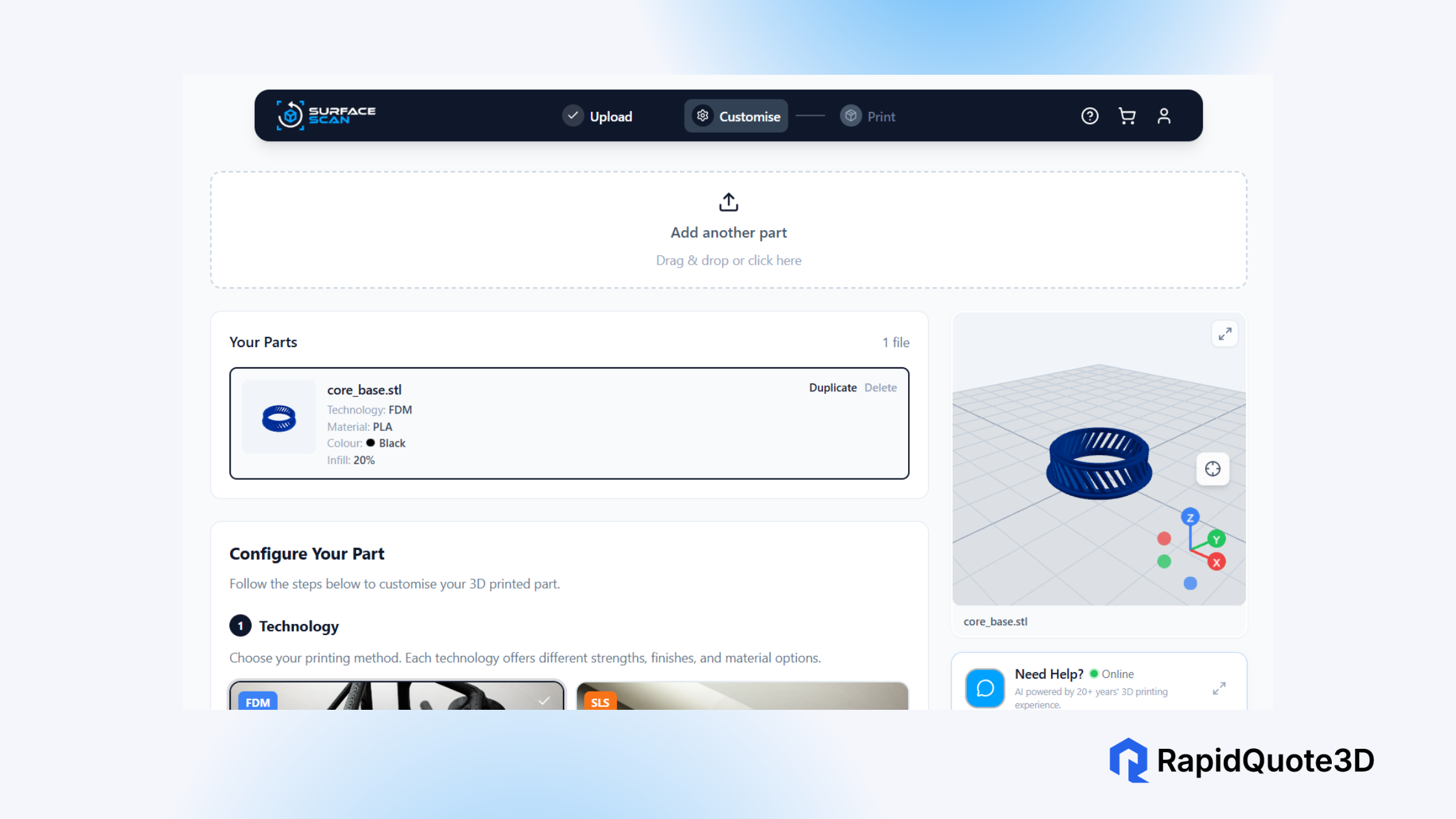
Move to instant quoting on your website. Clients can upload their file, see pricing immediately, and can move forward without waiting for manual review. Modern 3D printing quoting software removes delays and captures intent at the moment it is highest.
Platforms purpose-built for 3D print shops, such as RapidQuote3D, combine instant quoting with checkout and order tracking, so quoting is no longer a standalone task but part of a connected sales process.
2. No Structured Follow-Up Means Lost Revenue
Not every client completes their purchase during their initial visit. Some people need to compare materials, verify budgets, or simply forget.
Without automated follow-ups, these enquiries vanish.
In e-commerce, structured quote reminders and abandoned cart recovery are standard processes. But in 3D printing, many businesses still use manual emails or no follow-up at all.
The solution:
Automate your follow-ups. For incomplete quotes, send an email reminder. Create sequences for abandoned carts. Provide status updates and automatically confirm orders.
When follow-up is systemised, you recover revenue that would otherwise be lost.
3. Disconnected Systems Create Friction
Many print shops use separate tools for quoting, emails, order tracking, customer communication, analytics, and promotions.
Things can slip through the cracks when systems are disconnected. When there is no clear system in place, orders get overlooked, customers chase updates, and employees waste valuable time searching for information.
Friction slows growth and lowers confidence.
The solution:
Centralise operations. Everything should be in one location, from quote to delivery. While you do not need to invest in a complicated CRM platform, prioritise order management, automated emails, quoting, and customer tracking.
These workflows can be connected without adding complexity, thanks to all-in-one platforms created especially for 3D printing companies.
4. Poor Communication Around Materials and Print Settings
Customers may not fully understand the difference between PLA, PETG, ABS, Nylon or resin materials. They may not understand infill percentages, layer heights or print technology differences such as FDM vs SLA vs SLS.
When there is a gap in understanding and expectations, this can be perceived as a poor experience. It can lead to an ambivalent view on the service, refund requests, negative reviews, and worse — lost repeat business.
For customers who are new to 3D printing, the problem can appear even earlier in the process. Too many unfamiliar technical choices can feel overwhelming, which causes some buyers to abandon the order before completing it.
The solution:
Educate consumers before they make a purchase. Give clear material guidelines that include ratings for heat, strength, and flexibility. Describe print technologies and infill settings in terms they understand. Make it simple for clients to select the best option.
To lessen confusion and boost customer confidence, some newer quoting systems now incorporate AI-driven material recommendations and embedded educational content.
This approach not only improves the buying experience but also reduces the need for customer service calls and long email exchanges.
5. Shipping and Order Updates Are Not Transparent
The customer experience continues even after they make a payment.
If they do not receive clear updates about production status, dispatch or tracking, they begin to doubt the order. They ask for more information via support emails, and their trust in your business is affected.
Reliable communication builds repeat business.
The solution:
Automate order confirmations and shipping notifications. Make production status visible. Keep customers informed without adding manual admin time.
When communication is proactive, support load drops and customer satisfaction rises.
6. No Clear Niche or Target Market
Many 3D printing businesses try to appeal to everyone.
Prototyping. Cosplay. Engineering parts. Architectural models. Hobbyist prints.
Trying to appeal to everyone can make marketing confusing and pricing inconsistent. Businesses with a clear focus tend to perform better, as their marketing message is more targeted and appealing to their target audience.
The solution:
Look at what your customers are actually ordering and focus on what is profitable. With tools such as built-in analytics, you can see what is working, what is not, and what materials are most profitable.
7. Marketing Brings Traffic, But Process Converts It
You can use SEO, paid advertising, and social media marketing to drive traffic. However, having traffic is not enough. You need to convert it into sales.
If you cannot:
- Instantly provide pricing
- Guide customers towards the right material
- Automate follow-up
- Recover abandoned baskets
Then you are partially wasting money on marketing. You grow when demand and process meet.
The solution:
New 3D printing businesses are turning their websites into sales machines. This includes:
- Instant 3D print quoting on your website
- AI sales assistance to educate customers
- Abandoned quote and cart recovery
- Order confirmations and status updates
- Centralised dashboard for tracking quotes, orders, and sales
- Discount and promotion management
When you connect quoting, checkout, and follow-through, you do not generate leads. You convert them.
Turning Enquiries Into Revenue
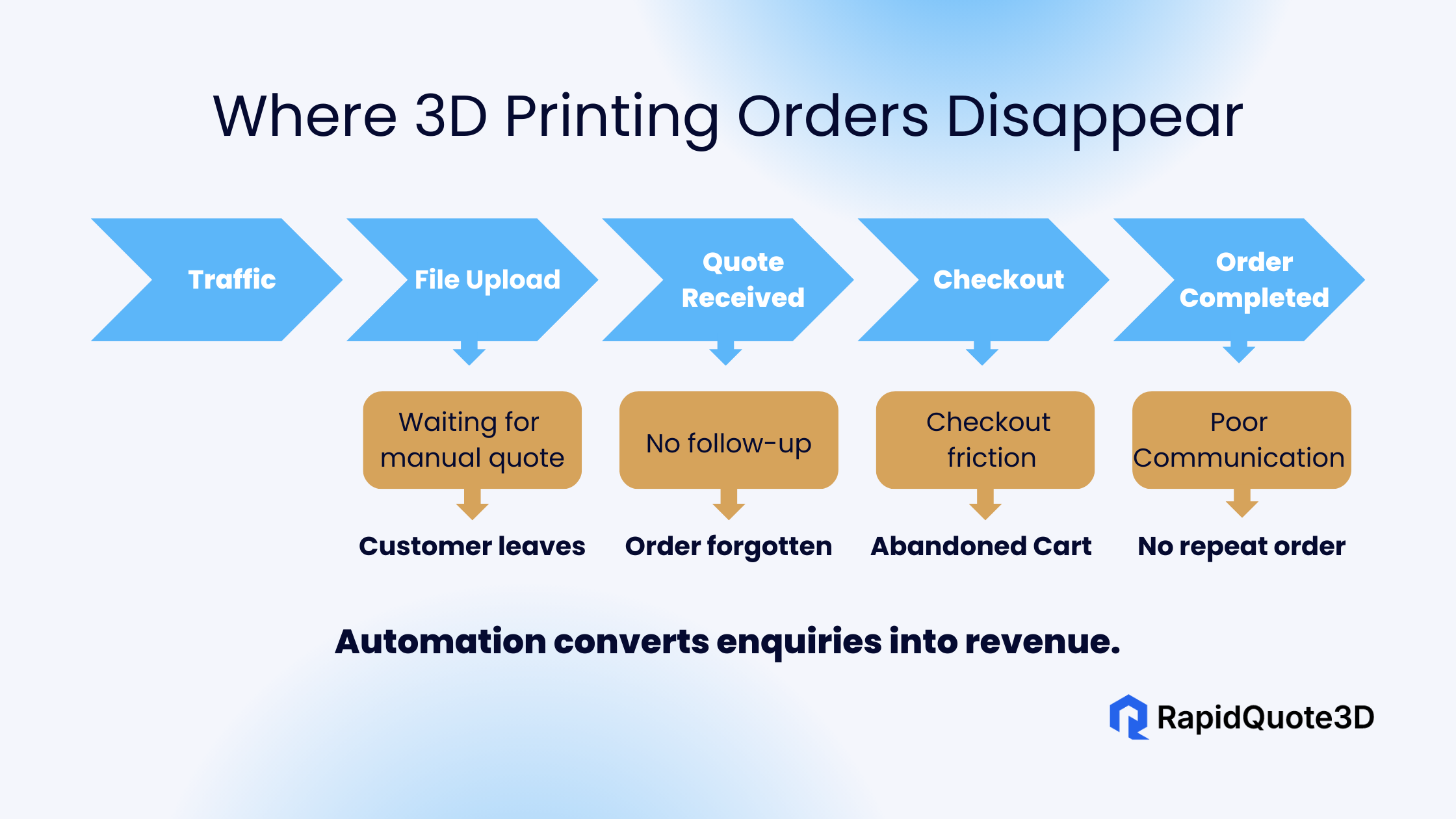
By now, it is clear that many 3D printing businesses lose revenue not because of demand, but because of friction in their processes. Slow quoting, unanswered questions, abandoned carts, and disconnected systems quietly erode orders every day.
Closing that gap is where RapidQuote3D comes in. Developed inside a high-volume production environment, it is more than a quoting tool. It is a growth platform that helps convert enquiries into orders. The interface guides customer decisions, an AI assistant answers questions instantly and suggests optimal configurations, and built-in education reduces uncertainty at every step.
After checkout, automated workflows recover abandoned baskets, confirm orders, and encourage repeat purchases. Discount campaigns and creator programmes turn one-off buyers into long-term revenue. Everything — from quoting to checkout to follow-up and analytics — works together in a single dashboard.
Setup takes 20 minutes. Start with a free 14-day trial or book a no-obligation demo call with one of the founders.
Ready to Automate Your 3D Printing Quotes?
Start your 14-day free trial and see how RapidQuote3D can transform your business.
Start Free Trial